Five of Swords
Swords
Pyrrhic victoryunspoken resentmenttactical withdrawal
The image
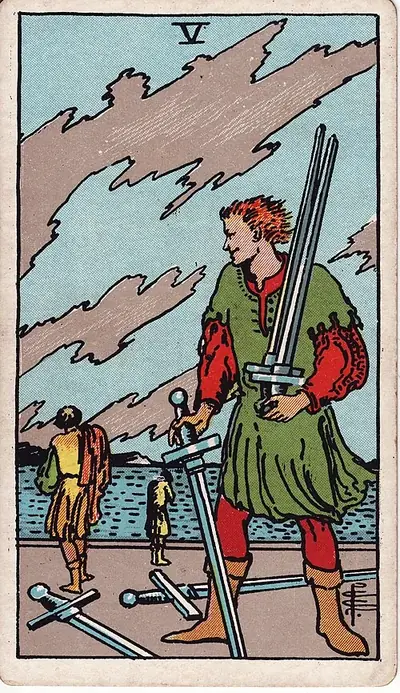
Pale slate clouds dominate the chilly sky, catching a harsh, bleak light that drains warmth from the desolate coastal scene. In the foreground, a grinning figure gathers up five scattered swords, having claimed them in a dispute. Two defeated figures retreat toward the distant, choppy sea with slumped postures, mourning their losses. The victor stands alone in a posture of arrogant triumph, yet the barren landscape and departing peers hint that this conquest carries a heavy emotional cost, capturing the hollow reality of winning a battle while permanently damaging vital social bonds.
Upright
Overall
Confrontations frequently conclude with one party securing a technical win while alienating everyone involved in the process. This dynamic highlights situations where achieving the immediate objective destroys the underlying relationship, leaving the triumphant individual isolated in a landscape defined by bitter resentment and lingering distrust among former allies.
Love
Romantic dynamics often feature lingering bitterness, petty point-scoring, or the urge to win a disagreement rather than understand a partner. This orientation is more about bruised pride than deep emotional estrangement, suggesting that forcing compliance will only erode intimacy and leave both individuals feeling entirely defeated and emotionally guarded.
Work
Professional settings frequently involve toxic workplace politics, where colleagues compete aggressively and undermine each other for status. Success here comes at a heavy cost to team morale, signaling that ruthless ambition is actively destroying collaborative potential and creating an environment defined by deep suspicion and persistent, low-grade resentment.
Money
Financial attitudes often lean toward competitive acquisition, hoarding resources to feel secure, or driving hard bargains that leave others feeling cheated. This energy tends to prioritize short-term material leverage over fair exchange, pointing toward a mindset where economic security is weaponized to establish dominance rather than foster stability.
Advice
Consider whether proving your point is truly worth the relational damage it causes. Step back from the urge to dominate the current discussion and allow the other person to retain their dignity, even if it means letting go of a trivial victory in favor of preserving mutual respect and long-term harmony.
Reversed
Overall
Exhaustion follows a prolonged period of petty disputes, creating an opening for participants to finally step away from the battlefield. People often realize that continuing the fight yields no actual benefit, prompting a quiet retreat where the focus shifts entirely toward nursing wounded pride and contemplating the heavy cost of past aggression.
Love
Partnerships often experience a softening of defenses, moving away from past arguments toward a mutual desire to rebuild trust and emotional safety. This phase is more about acknowledging past hurts than continuing to assign blame, creating an opening to forgive, apologize, and slowly re-establish genuine vulnerability after a period of intense strain.
Work
Workplace environments begin to recover from intense political infighting, shifting focus toward mediation, compromise, and repairing damaged professional relationships. Team members are typically exhausted by constant competition, making this an ideal moment to foster cooperation, acknowledge shared mistakes, and build a more supportive foundation for future collective projects.
Money
Financial habits reflect a growing weariness with aggressive negotiations or the stress of constantly guarding resources against perceived threats. People often choose to walk away from unfair financial arrangements, prioritizing peace of mind and ethical alignment over squeezing every last drop of advantage from a tense commercial interaction.
Advice
Reflect deeply on what it would take for you to offer an unreserved apology without attaching conditions to your remorse. Acknowledge the specific ways your previous defensive reactions contributed to the current standoff, and consider how taking accountability might open the door to genuine healing and restored trust with those you care about.
Reversed is not "the opposite of upright" — more often it means stuck energy, overdoing it, or bad timing.
Three cards (past / present / direction) →
Content on this site is AI-generated and provided for entertainment and self-reflection only. It is not medical, legal, financial or psychological advice.